Spirits Are Real. Let’s Write That Way.
AI, beliefs, and talking to the Spirits of Addiction
As AI slams into the cultural zeitgeist, we’re getting an introduction to the bizarre and glimpses of the inevitable. We’re talking fake news dropping from politicians’ computer-generated mouths, your favorite famous person showing up in deep-fake porn, and viral images that seem real—but are they?
This is all before the next wave, when neural links will blur the line even more.
So, what’s real? And, regardless of what’s real, what’s stronger? Belief or reality?
What’s stronger: belief or reality?
In my work in the addiction recovery space, this is one of my favorite questions and tends to produce big reactions.
Why? Well, because it’s not so simple. Belief is sticky and has traction.
A prevailing belief among many who are caught up in addiction goes something like this: “I don’t have a problem with (fill-in-the-blank). I’ve got everything under control.”
That may be their personal belief but, to the outside looking in, they most certainly do have a problem and are completely out of control.
In this case, the addict’s belief is stronger than the reality. Everyone aside from the addict can see that. Meanwhile, the addict clings to a belief that perpetuates the cycle of addiction (and makes it even more obvious), and around and around it goes.
We call this denial. It’s a real thing. It’s so real that it’s even stronger than reality.
So, what’s real here?
The objective reality that the addict has a problem that’s causing harm to themselves and those around them…
…or the addict’s belief that they’re in control?
Well, both are true at the same time, aren’t they? After all:
- The person does have a problem and is causing harm.
- They are in control—just not how they think. They’re in control of perpetuating the cycle.
When belief becomes spirit
In shamanism, the reality of an embedded belief can take on a life all its own. This is a spirit, which has form, substance, and its own agenda.1
To gain insight into this situation, let’s turn to the language of spirit—which is symbolism and metaphor. Let’s visit this spirit as The Wall of Denial.
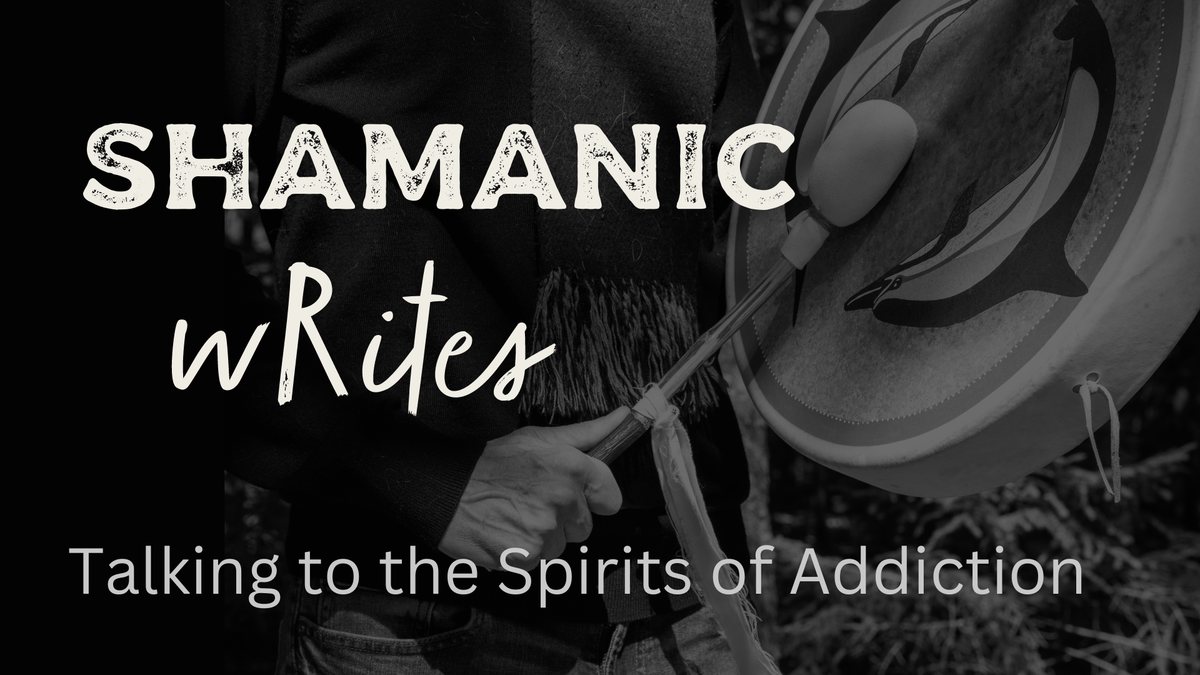
We’ll do this by making use of our Shamanic wRites exercise. Here’s the step-by-step guidance:
- Prepare the setting in Ordinary Reality.
Set aside a specific time and place, and gather the materials you need to undertake the exercise.
- Relax.
You can use the guided audio, which will lead you through the 3-minute, traditional Qi Gong visualization I’ve used at treatment centers:
Or, you can do this same exercise on your own without the audio.
Or, you can do your own exercise that relaxes the body, regulates the breath, calms the mind, and shifts awareness to your heart.
- Connect with your spirits.
From this place of the heart, call upon your helping and compassionate spirits. Receive whomever will accompany you today and connect—from your eyes to their eyes, from your heart to their heart. Breathe into this connection.
- Go to The Wall of Denial.
From this place of connection with your helping spirit, ask to be shown and to be taken to your Wall of Denial.
If you’ve already done the Medicine Journey to The Wall of Denial, just bring these experiences back into the moment. If not, spend a moment there getting to know your Wall’s characteristics by answering these questions:
- What does it look like?
- What are your initial impressions?
- What is it made of? Feel it.
- How big is it?
- Where does it go?
- Ask your helping spirit to show you what lies on the other side. What’s there?
- Receive the prompt.
Receive and write from the following prompt:
Dear my Wall of Denial, I see, feel, and know your messages and now I need to get to the other side of you because…
If you’re following along using the guided audio above, this is where the drums will begin. If you aren’t using the guided audio and prefer to use this audio track of just drums, begin it now.
As always, put pen to paper and just let it rip. Keep writing. This is not the time for censorship, judgement, or editing.
If you’re using either the guided audio or just-drums audio, keep going until you hear the call back, which signals the end of the exercise is coming in one minute.
- Release with thanks.
Release your connections to The Wall and your compassionate and helping spirits and send your thanks into everything you’ve seen and done.
After wRites
Well, what did you get? Is The Wall of Denial real? What’s stronger: belief or reality?
For me, it’s all about belief. And when working with clients, the most important thing is not my belief but, rather, fitting my language and medicine into their beliefs.
The reason this is essential is because so much of addiction is rooted in limiting core beliefs—ones that are based upon and perpetuate lies. To help a person expose, weaken, and dismantle their limiting beliefs—and help them get free from addiction—I meet them where they are.
We start with their beliefs to address (and change) their reality.
The Shamanic wRites exercise offers an opportunity for exactly this. It offers possibilities for a supportive, honest, courageous path forward.
It’s a central component of The Sober Shaman’s Path of Recovery, where you’ll find a unique Shamanic wRites exercise in every one of the 52 Lessons. Access your Free Preview here.
If you or anyone you know is struggling with addiction and looking for this kind of help, reach out to me here: spirit@randallyons.com
And if you feel like sharing your writing to The Wall of Denial, I’d love to hear what you received. Just email me at the address above or leave a comment below.
With Blessings,
Randal
Watch the video for lots of additional insights on this particular exercise, as well as why using shamanism for addiction treatment works.
You can also listen to this same information on the podcast here:
 Randal Lyons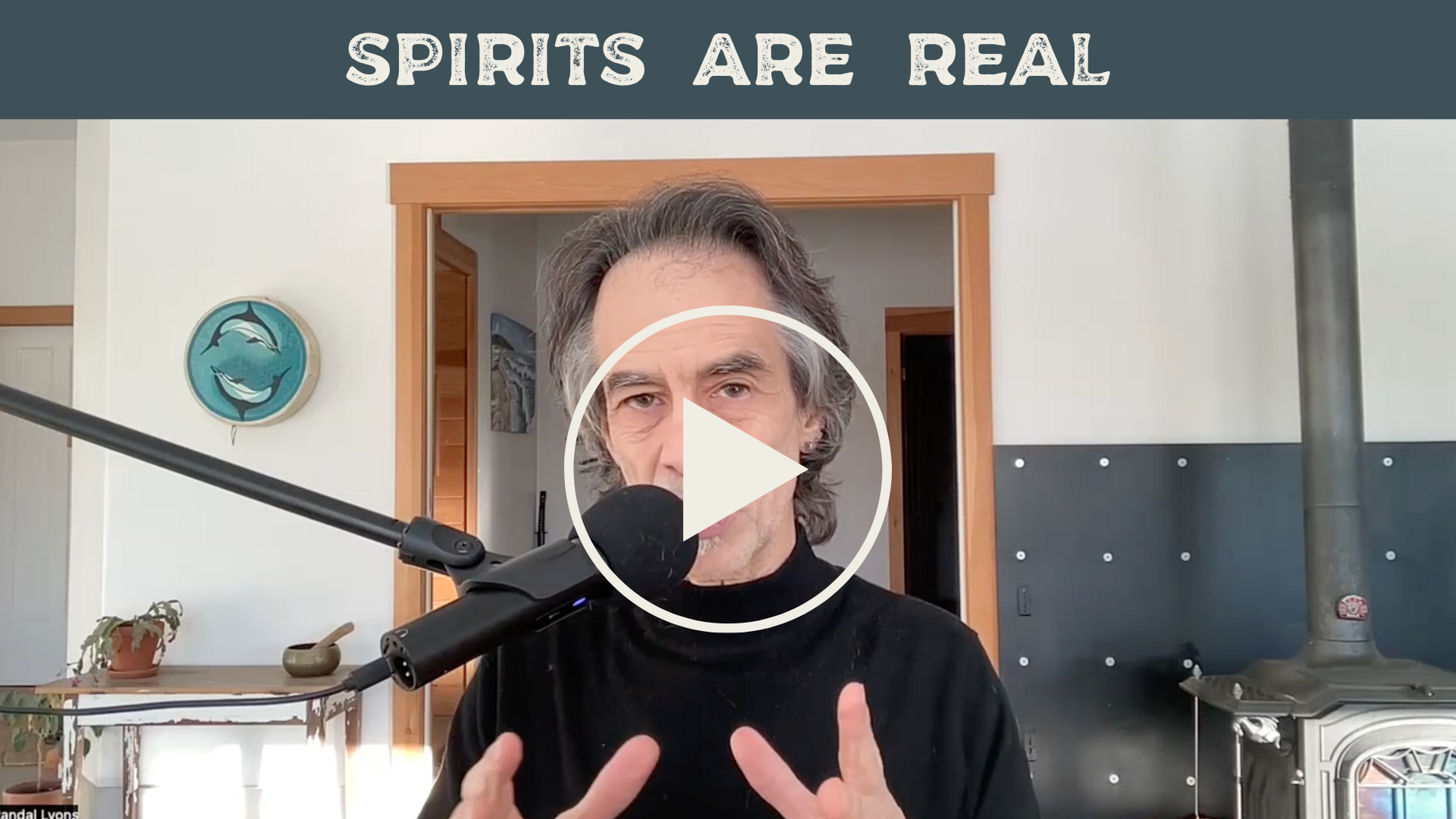
P.S., Here’s another podcast episode where we explore this concept further, as well as provide the guided Shamanic wRites exercise to the Wall of Denial:
 Randal Lyons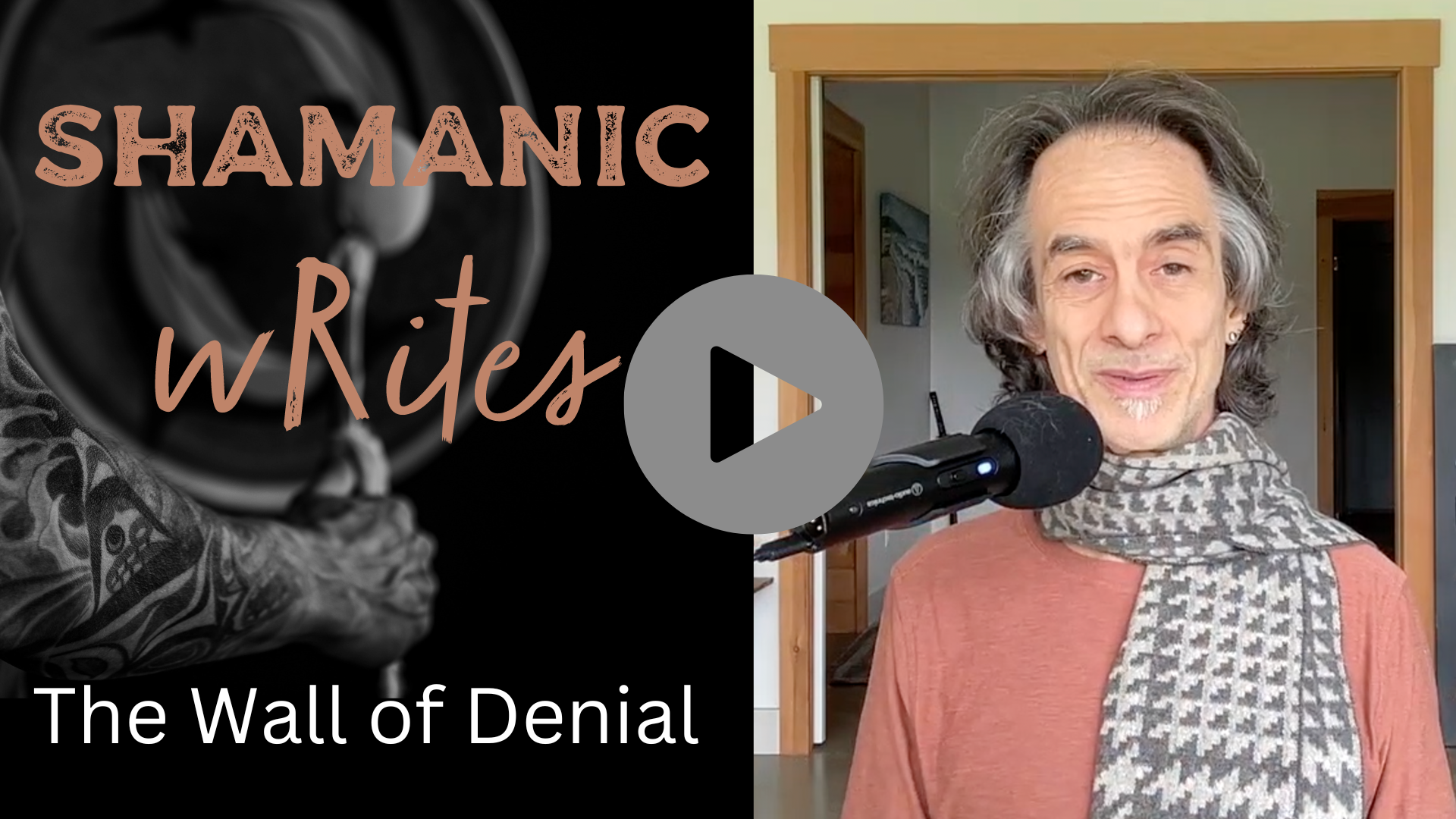
This is an important distinction between shamanism and psychology. In shamanism, this spirit is seen as outside of oneself. In psychological approaches (as well as traditional writing approaches), it’s seen as part of oneself—existing within one’s imagination or mind.
In addition to considering the belief as a spirit, another scenario is when the belief comes from a spirit. This gets more complicated, but the main dynamics are the same. I’ll be discussing this in more detail in an upcoming episode of The Sober Shaman podcast. ↩